
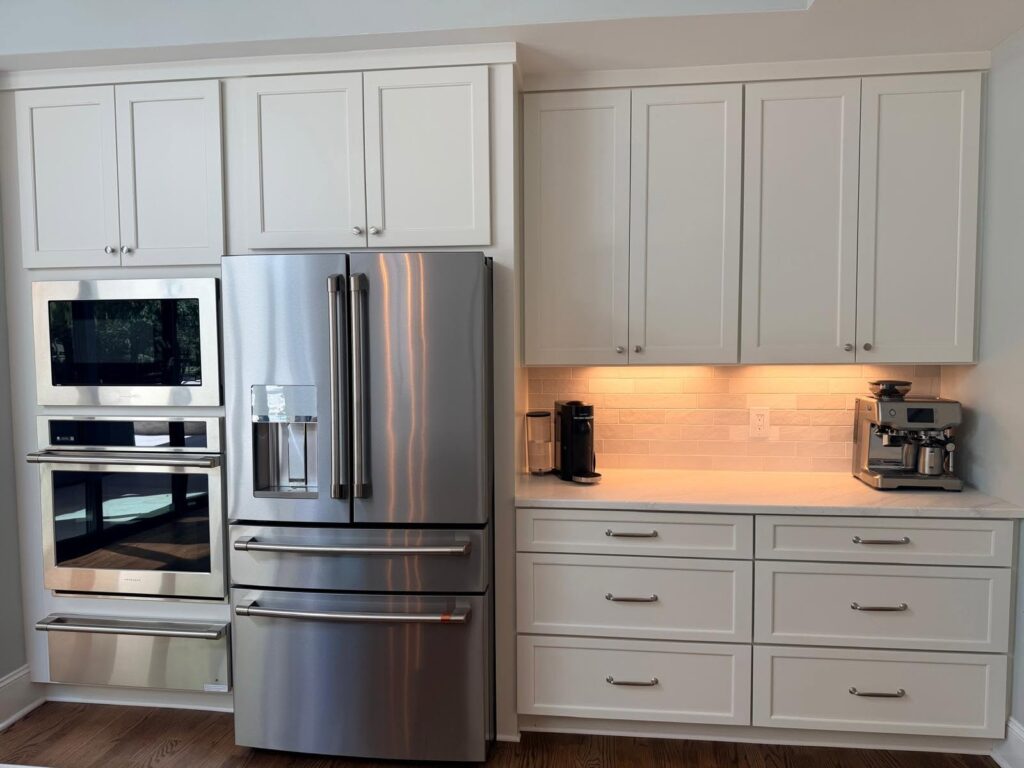
At some point, we decided every room in the house needed to justify its existence. The dining room became the homework station. Then, guest room became the home office. Also, the kitchen island became the command center, homework desk, mail sorter, laptop bar, craft table, and occasional place where someone actually eats. Even the living room has apparently been promoted to family room, playroom, television room, reading room, and charging station.
Efficiency is wonderful.
But what if your home needs a little less efficiency?
What if one room could simply be one thing?
A room for reading. Or a room for dinner. Maybe a room for conversation. A room for music. The one room for morning coffee. A room where nobody is expected to answer an email, fold laundry, or find a missing soccer cleat.
That is the idea behind a single-purpose room, which can be a hallmark of intentional home design. And for homeowners considering a luxury home renovation in Cornelius, NC, creating one may be a more meaningful use of space than adding another room that has to do everything.
The Case for a Room With One Job
Multifunctional spaces make sense.
Most families don’t have unlimited square footage, and flexible rooms can be incredibly useful. A home office that doubles as a guest room is practical. A playroom that eventually becomes a teenager’s hangout is smart. A kitchen that accommodates cooking, eating, and gathering is often exactly what people want.
The problem comes when every room has to multitask. When everything has multiple purposes, nothing feels particularly focused. A dedicated room creates a different experience. Its purpose becomes clear the moment you walk through the door. That clarity can change how you use it.
The library invites you to sit down.
A dining room encourages a meal to last a little longer.
Perhaps a sitting room makes conversation the main event.
A music room gives you somewhere to actually listen instead of treating music as background noise.
The room doesn’t have to be large. It simply needs permission to do one thing well.
Luxury Isn’t Always More Space in Intentional Home Design
When homeowners think about a major renovation, the instinct is often to ask how they can get more. More square footage. Or more storage. Maybe more seating. More entertaining space. Sometimes it’s more bedrooms. More everything.
Yet luxury can also mean less competition for your attention.
A small reading room may provide more value to your everyday life than a much larger bonus room that has become the family’s catch-all. Likewise, a compact dining room can feel more special than a giant open space where dinner, television, homework, and work calls all happen simultaneously.
The point isn’t to make your home less useful. It’s to make some parts of it more intentional.
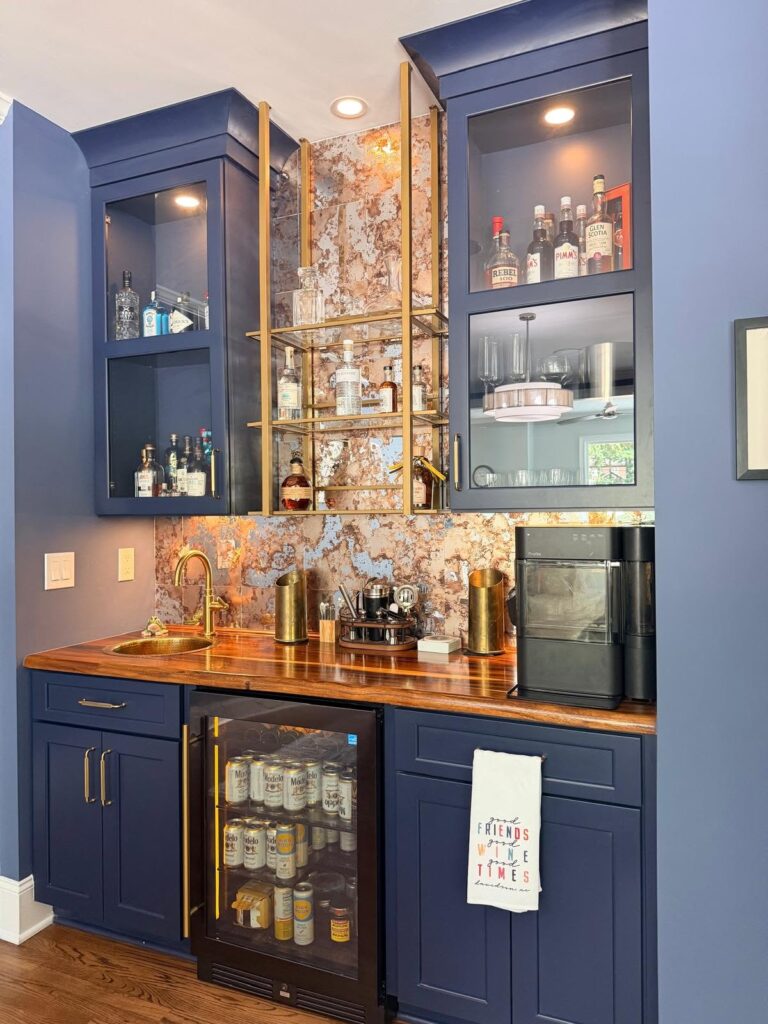
Think About What You Miss in Your Current Home
Before deciding what kind of dedicated room you want, think less about trends and more about what your home is currently missing. Do you miss having somewhere quiet to read? Would you love a place where you could sit with a cup of coffee without looking at the laundry? Do you wish dinner felt more like an occasion?
Would you use a room for painting, gardening, sewing, collecting records, playing an instrument, or working on a hobby if you didn’t have to clear the dining table first? Maybe you want a sitting room where adults can talk while the television is somewhere else. Perhaps you simply want a beautiful room that exists because you enjoy being in it.
Those answers can reveal more about your renovation than a list of trending features ever will.
The Return of the Dining Room in Intentional Home Design
The dining room is probably the clearest example of a space that has spent the last few decades defending its existence. Open-concept living made formal dining rooms feel unnecessary to many homeowners. Then people started realizing that sometimes it is nice to eat dinner without staring directly at the dirty dishes.
A dedicated dining room doesn’t have to be formal or precious. It can be relaxed. It can have comfortable chairs, interesting lighting, artwork you actually love, and a table large enough for Sunday dinner or a holiday gathering. Most importantly, it can give meals a beginning and an end.
You sit down, you eat, you talk. Nobody needs to answer a Slack message from the end of the table. That’s a fairly decent luxury these days.
A Library Doesn’t Have to Look Like a Library
A dedicated reading room doesn’t require floor-to-ceiling mahogany bookshelves and a fireplace, although if the architecture gives you those things, please accept the gift.
A library can be surprisingly simple.
Built-in shelving can create storage and architectural interest. Comfortable seating can establish a clear purpose. Adjustable lighting makes the room useful throughout the day. A small table provides somewhere for a book, coffee, or glass of wine.
Even a modest room can become a destination. The important part is removing competing functions.
When the room isn’t also responsible for storing toys, housing a treadmill, and accommodating overnight guests, it becomes much easier to settle into it.
Create a Room for Conversation with Intentional Home Design
We’ve spent years designing homes around screens. The television is often the visual anchor. Furniture points toward it. Kitchens open into family rooms so everyone can watch the same thing while doing different things.
But there is still value in a room designed around people facing one another. The sitting room can be intentionally small. Two sofas facing each other may encourage more conversation than one enormous sectional pointed at a television. A pair of comfortable chairs can create an intimate reading or coffee spot. A central table gives people somewhere to set down a drink without turning the entire room into a furniture obstacle course.
The architecture doesn’t need to announce what the room is for, the arrangement does that.
Dedicated Spaces Can Be Surprisingly Flexible
There is an important distinction between single-purpose and single-use. A room designed primarily for reading can still accommodate a friend. The dining room can host a holiday buffet, birthday dinner, or game night. A music room can become a listening room, practice space, or intimate gathering area.
The room has a primary purpose, but that doesn’t mean the door gets locked whenever something else happens. Think of it as a hierarchy. One function gets to be the star. Everything else is a supporting role. That is very different from asking every room to be equally responsible for everything.
Don’t Let the Square Footage Dictate the Value
A dedicated room doesn’t need to be enormous. In fact, smaller spaces can be particularly successful when they have a clear purpose.
A ten-by-twelve room may not seem impressive on a floor plan. Yet with the right proportions, lighting, built-ins, windows, and furniture, it can become one of the most memorable rooms in the house. That’s because square footage isn’t the only measure of usefulness. Frequency matters. Emotion matters. Experience matters.
If you use a small reading room every morning for twenty minutes, it may bring you more everyday satisfaction than a huge bonus room you rarely enter. Luxury renovation isn’t necessarily about creating the biggest possible house. It’s about creating a house that feels exceptionally well suited to the people who live there.
Architecture Can Make the Purpose Obvious
The best single-purpose rooms don’t rely entirely on furniture to communicate what they are.
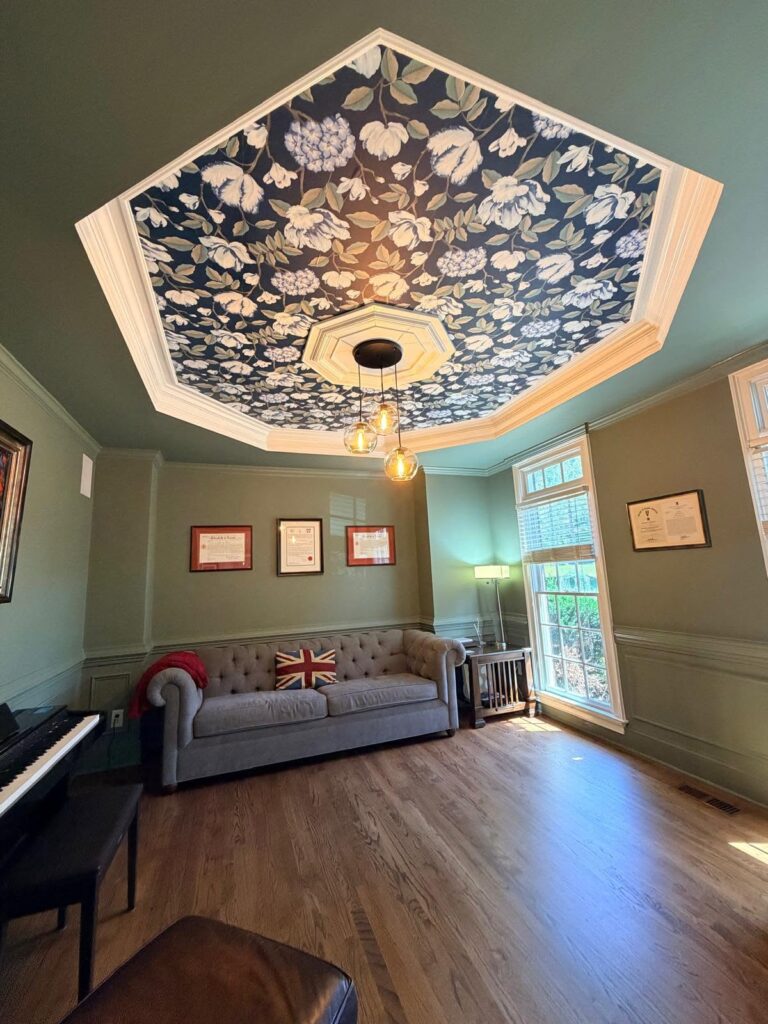
Architecture can reinforce the idea. Built-in bookshelves can establish a library. The fireplace can create a natural gathering point. A dramatic light fixture can make a dining room feel intentional. Pocket doors can separate a quiet room from a busier part of the house. A window seat can turn an overlooked corner into a reading destination. Mill-work, ceiling treatments, flooring transitions, and lighting can all help give a room its own identity.
These aren’t necessarily flashy renovation features. They are the details that make a space feel considered.
This Can Be Especially Valuable in an Open Floor Plan
Open-concept homes aren’t going anywhere, and there are plenty of good reasons people love them. They make entertaining easier. Often, they can improve sight-lines. They allow light to travel between spaces. They often make a home feel larger. But openness doesn’t have to mean everything happens in one giant room.
Strategic separation can actually make an open home feel more sophisticated. A nearby library with glass doors. Or a dining room separated by a wide cased opening. A small sitting room tucked off the main living area. Or, a study with a pocket door.
These spaces create moments of transition without making the house feel chopped up. The result is a home with both connection and retreat. That’s a valuable combination.
What Would You Give a Room Permission to Be?
For homeowners in Cornelius, NC, a renovation can be an opportunity to reconsider how the existing square footage is working before automatically adding more. Maybe the formal dining room has been sitting empty because it feels too formal. Perhaps, a bonus room has become a storage warehouse with a television. Maybe an underused bedroom could become a library, study, music room, or creative space.
Perhaps the biggest opportunity isn’t adding another room at all.
It’s giving an existing room a clearer identity.
That kind of renovation requires looking beyond the question of “What will add the most?”
Instead, ask:
What would make this home feel better to live in every day?
That is a much more interesting question.
Give One Room Permission to Be Just One Thing with Intentional Home Design
At Two Chicks Homes, we believe renovation should begin with how you actually live, not simply with a list of rooms or finishes you think you’re supposed to want. Sometimes the best renovation move is opening everything up. Sometimes it’s creating a stronger connection between spaces. And sometimes, surprisingly, it’s giving one room permission to close the door and do exactly one thing.
For a luxury home renovation in Cornelius, that might mean transforming an overlooked room into a library, creating a proper dining room, carving out a quiet sitting area, or designing a dedicated space around a hobby you never seem to have room for.
Because intentional home design doesn’t have to make every square foot work harder. Sometimes luxury is letting a room simply be what it was meant to be.